Algorithms
COMSC 312 - Spring 2026 - Mount Holyoke College
Course Description
Imagine that you have been asked to solve a problem by writing a program. You come up with your solution, implement it, and cross your fingers while you execute the code. No errors print out, but it also doesn’t complete execution, even after a couple minutes! What could be going on? Your program might have an infinite loop or recursion or it might just need some more time running… In this course, you will develop the language and skills required to design, analyze, and communicate precisely about computational problems and their solutions. An algorithm is a computational procedure that correctly solves a specific problem. Packed into that description is the following algorithm design process:
- pose the problem rigorously (formulate a mathematically clean definition)
- propose a solution as a procedure (described in a way that can be implemented within a specified computational model, e.g., a random-access machine)
- prove that the procedure correctly solves the problem
- analyze the procedure’s running time Each of these steps is done with a high-level description of the problem and algorithm, before writing a single line of code. The problems you will see often arise in real-world applications, and you’ll discover that some are provably impossible to solve, while others are only known to have solutions that are computationally infeasible (running times that could take more than a lifetime)!
Table of contents
- Course Description
- When and Where
- Topics
- Textbook
- Coursework
- Grading
- Late Policy
- Attendance Policy
- Accommodations
- Title IX/Responsible Reporter
- Academic Integrity & Honor Code
- Audio/Visual Recording Policy
When and Where
- Lecture
- Tues/Thurs 1:45pm - 3:00pm, Clapp 218
Topics
- Algorithmic paradigms [common ways for solving a problem]
- greedy algorithms
- divide and conquer
- dynamic programming
- network flow
- Theory for computational infeasibility [intrinsic difficulty of a problem]
- NP-completeness
- computational intractability
Textbook
We will roughly cover material from Algorithm Design by Kleinberg and Tardos, though we will use supplementary material from other sources as well.
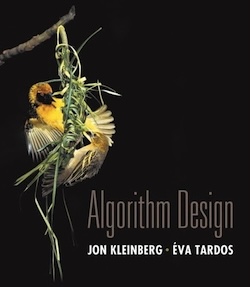
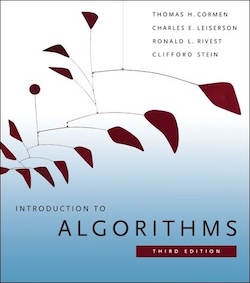
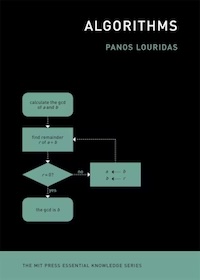
You may wish to refer to Introduction to Algorithms, Third Edition by Cormen, Leiserson, Rivest, & Stein for a concise presentation of the material. It’s often referred to as CLRS. For a refresher on background material, consider checking out Algorithms by Louridas from the MIT Press Essential Knowledge series.
Coursework
Students will complete:
- Weekly homework assignments (problem sets and reflections)
- Three timed open-notes, open-book take-home quizzes
- Mastery projects (four individual, one group)
- Readings
- Weekly practice exercises
- A cumulative final exam
Grading
- Homeworks: 25%
- Completion: 10%
- Reflection: 15%
- Quizzes: 15%
- Mastery Projects: 40%
- Individual Projects: 20%
- Group Engagement: 10%
- Group Project: 10%
- Final Exam: 20%
Late Policy
Homework and individual projects are due on Friday evenings at 11:59 PM. Late assignments will incur a penalty of 10% per day late, up to five days. After five days, late assignments will not be accepted unless prior arrangements have been made.
Attendance Policy
This course is designed to be highly interactive, and consistent attendance and active engagement are crucial for a deep and meaningful learning experience. Your presence and participation in class activities, discussions, and learning pod work are essential for success.
You are permitted three excused absences for the semester without penalty. This accounts for minor illnesses, appointments, or other personal circumstances. These three absences will not impact the attendance portion of your grade. An additional 1-2 absences will impact your grade by 2% each. For example, 4 absences will reduce your final grade by two percentage points (e.g., from a 93% to a 91%). Any absence beyond these five, even when excused, will result in a substantial penalty and may impact your final grade significantly. Simply put, if you are absent too often, you will not gain the depth of learning that comes from engaging in classroom activities. Individuals with “Flexible Attendance” can miss two additional class meetings.
You are responsible for communicating any expected or unexpected absences to your instructor as soon as you are able. Remember that attending class is a key academic expectation and a vital component of your success in this course.
Accommodations
Disability Services is the office on campus that determines academic accommodations for students with disabilities. If you need official accommodations through Disability Services, you have a right to have these met and kept confidential. Please contact Disability Services, located in Mary Lyon Hall 3rd Floor, at 413-538-2634 or disability-services@mtholyoke.edu. If you are eligible for academic accommodations, you will be provided with an accommodation letter. Once you receive your accommodation letter, I would like to meet with you and discuss these approved accommodations and our class. For more information on who might be eligible for accommodations and the application process please see the Disability Services website.
Title IX/Responsible Reporter
If you or someone you know has been a victim of discrimination, harassment or violence based on sex or gender and you would like to talk to someone about our resources, please contact the Title IX Coordinator, Shannon Da Silva at titleixofficer@mtholyoke.edu.
As a faculty member, I am a responsible reporter for any information I learn that may be a violation of our Gender-based and Sexual Misconduct Policy. This means that I will need to share this information with our Title IX Coordinator, Shannon Da Silva. This could be anything related to sexual assault, dating violence, stalking or sex or gender-based harassment. If you are experiencing any of these things and you want to talk with someone who is not a responsible reporter, I can help direct you to private and confidential resources on campus (Counseling Service, Health Services, and Alcohol and Drug Awareness Project. These offices have a legal mandate for confidentiality. These offices are not required to turn over identifying information to the Title IX coordinator but may provide anonymous data to the Title IX coordinator for reporting requirements of the Clery Act).
Academic Integrity & Honor Code
Mount Holyoke College is a community of students, faculty, staff, and administrators committed to free inquiry and the pursuit of knowledge in the tradition of the liberal arts. The decision to join this academic community requires acceptance of special rights and responsibilities that are essential for its effective functioning and the realization of its mission. All members of the community share the responsibility to uphold the highest standards of academic integrity.
We expect all your work to abide by the MHC Honor Code: “I will honor myself, my fellow students, and Mount Holyoke College by acting responsibly, honestly, and respectfully in both my words and deeds.” Any work that does not will be reported to the Academic Honor Board. For more detail on what constitutes an academic violation of the Honor Code, please see the Student Accountability webpage.
AI Usage: Unless an activity or assignment explicitly directs you to use AI, we expect that all work submitted by students will be generated by the students themselves, working individually or in groups. Students should not have another person/entity do the writing or revision of any substantive portion of an assignment for them, which includes hiring a person or a company to write assignments and using artificial intelligence tools like ChatGPT.
Audio/Visual Recording Policy
To encourage active engagement and academic inquiry in the classroom, as well as to safeguard the privacy of students and faculty, no form of audio or visual recording in the classroom is permitted without explicit permission from the professor/instructor or without a letter from AccessAbility Services, signed by the faculty member, authorizing the recording as an accommodation. Authorized recordings may only be used by a student who has obtained permission and may not be shared or distributed for any reason. Violation of this policy is an infraction of the Mount Holyoke Honor Code and academic regulations and will result in disciplinary action.